

What to Pack for a Tennis Weekend Away: A 3-Day Checklist for Court and Travel
Prepare for a 2-to-3-day tennis getaway with an organized packing checklist covering multi-session court outfits, racket spares, damp gear management, and off-court plans.
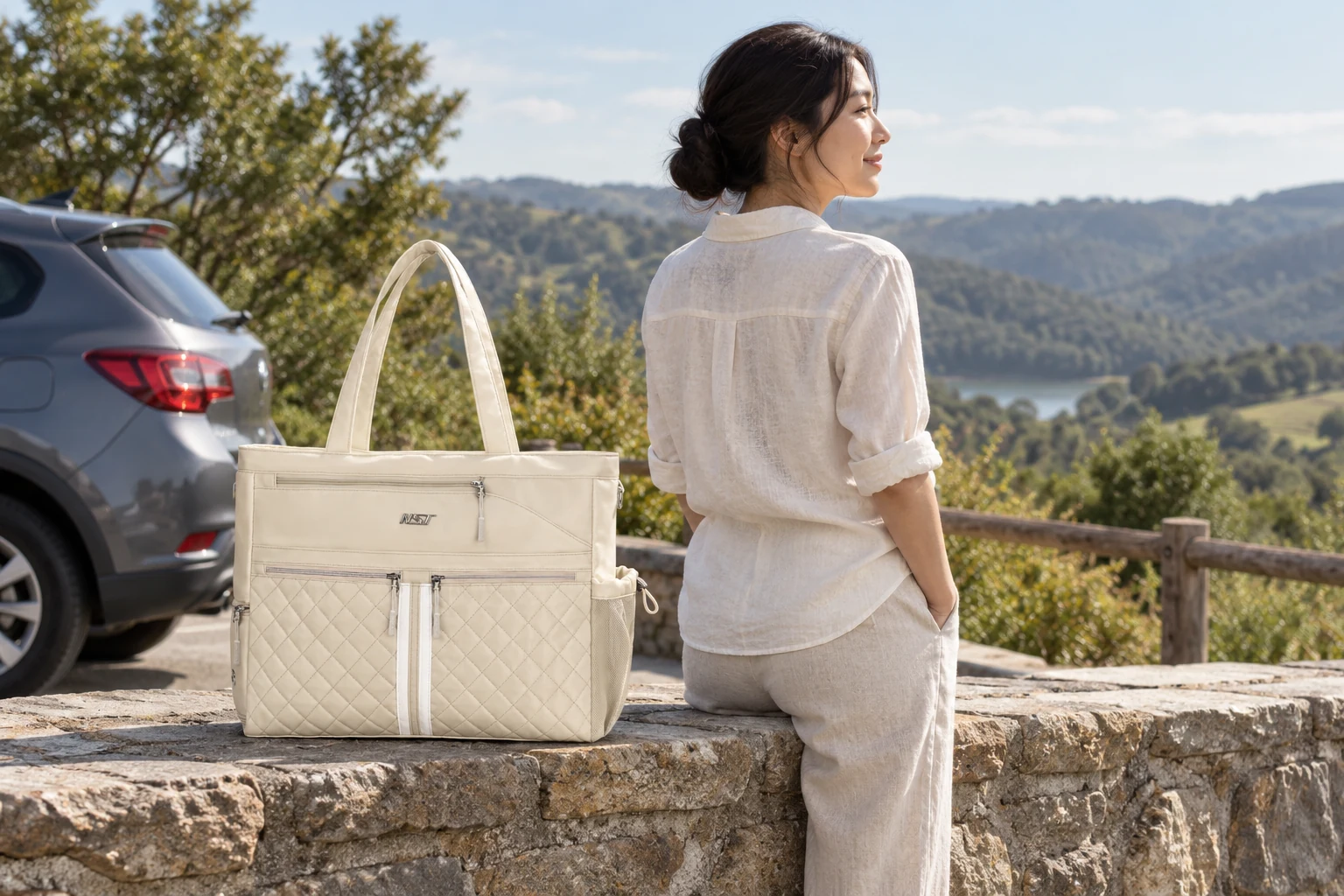
For a two- or three-day tennis weekend away, pack two rackets, dedicated court shoes, double your usual sock count, and enough fresh outfits to change after every hitting session. Add weather layers, sun protection, a few recovery essentials, and versatile casual clothes for dinners and downtime off the court. Before you pack, confirm the venue’s court surface, the daily schedule, and any clubhouse dress codes so you are not caught off guard.
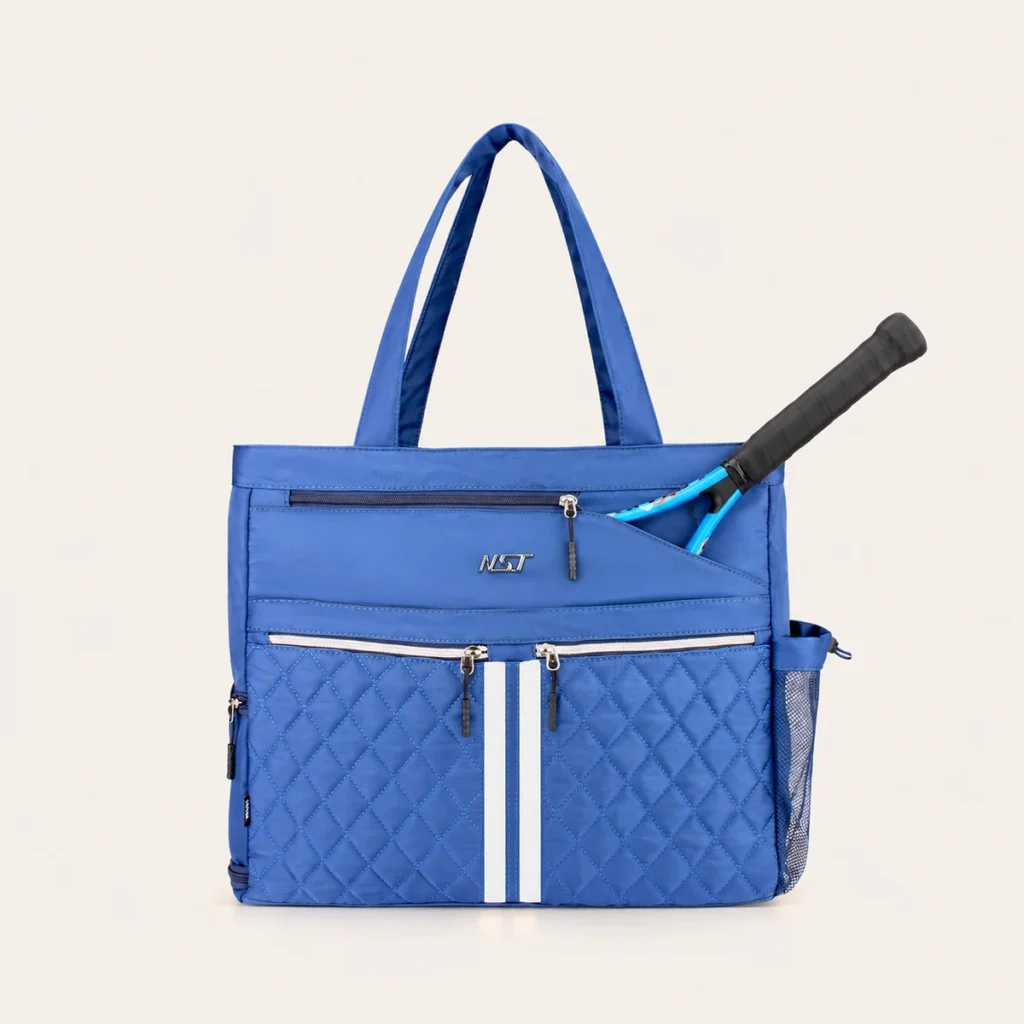
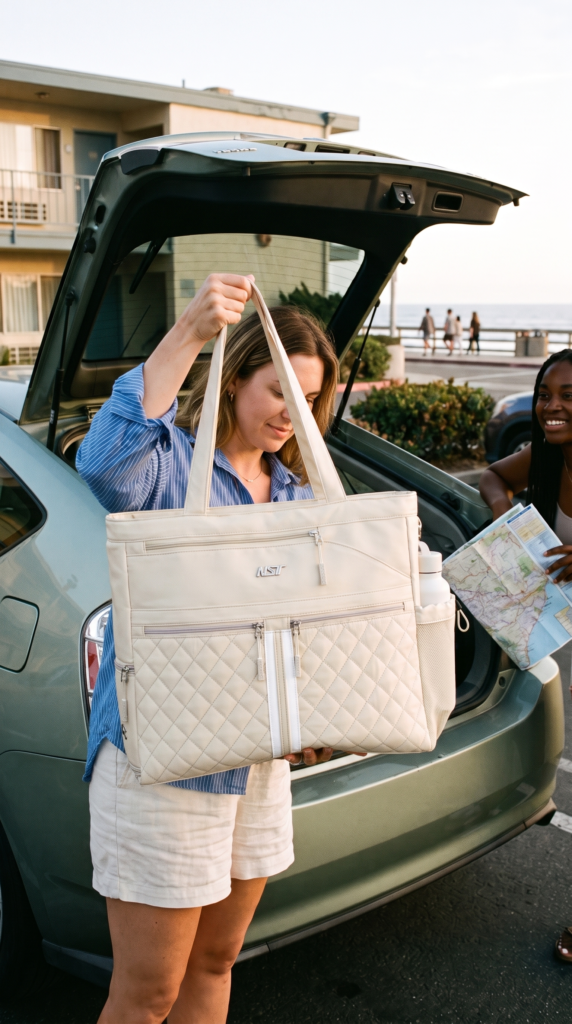
We designed the NST Tennis Tote for travel days that combine sport with everyday life: dual external racket pockets keep frames accessible outside the main bag, a separate lower compartment isolates dusty court shoes, and 35 liters of total capacity give your clothing, toiletries, and travel essentials organized room across its compartments. Here is how to plan your packing list for a weekend of drills, match play, and evenings off the court.
Check Trip Details Before You Pack
A tennis getaway is different from an afternoon at your home club. You are playing on unfamiliar courts, staying in accommodations where laundry is rarely available, and moving directly between athletic sessions and social plans. Confirming four practical details before packing saves luggage space and eliminates surprises:
- Court surface and footwear requirements: Find out whether you will be playing on hard courts, red clay, Har-Tru green clay, or grass. Clay courts require outsoles with a herringbone tread for lateral traction and controlled sliding, while hard courts demand durable all-court outsoles. Many private clubs and indoor facilities also strictly require non-marking soles to protect the playing surface.
- The daily itinerary: Are you booked for an intensive adult tennis camp with three to four hours of morning clinics followed by afternoon match play, or a relaxed weekend with one hitting session per day? High-volume schedules dictate how many playing kits you need.
- Clubhouse and dining dress codes: While athletic wear works on the court, traditional tennis resorts and private clubs often enforce dress standards off it. Check whether collared shirts, neat casual wear, or traditional all-white tennis attire are required before packing your wardrobe.
- Weather and rain contingencies: Check the forecast for your destination, but also confirm whether the facility has indoor backup courts. Cool morning starts and breezy evening round-robins require functional layers, while unshaded outdoor courts demand serious sun defense.
On-Court Equipment: The Gear You Cannot Improvise
When you travel for tennis, replacing broken or forgotten equipment is rarely as simple as heading to your local pro shop. Pack your essential playing gear first:
- Two matched rackets: Always bring at least two rackets strung at your preferred tension. If a string breaks during a Saturday morning drill session, resort pro shops or local stringers rarely offer immediate turnaround. If you are flying, note that while the Transportation Security Administration (TSA) permits tennis rackets in carry-on baggage through security checkpoints, screening clearance does not mean your airline will automatically allow them in the cabin. Racket frames often exceed standard carry-on dimensional limits, and individual airlines enforce their own sports equipment and overhead bin policies; gate agents may require them to be checked. Always check your carrier’s specific carry-on and sports gear rules before departure rather than assuming external pocket carry is guaranteed safe from gate checks.
- Backup string and overgrips: Bring a set of your preferred string in case you need to use an on-site restringing service. Pack two to three fresh overgrips: multi-hour weekend sessions quickly saturate grips with sweat, making rackets slick and harder to control. The USTA’s equipment checklist highlights extra overgrips and string as essential tournament and travel items.
- Cans of tennis balls: While structured camps and clinics usually provide drill balls, casual weekend getaways with friends or practice sessions often require your own. Keep one or two unopened cans on hand.
- Small court spares: Pack vibration dampeners, lead tape if you customize your frames, and an extra pair of shoelaces. Having small spares tucked in an interior organizer pocket keeps a minor gear failure from interrupting your court time.
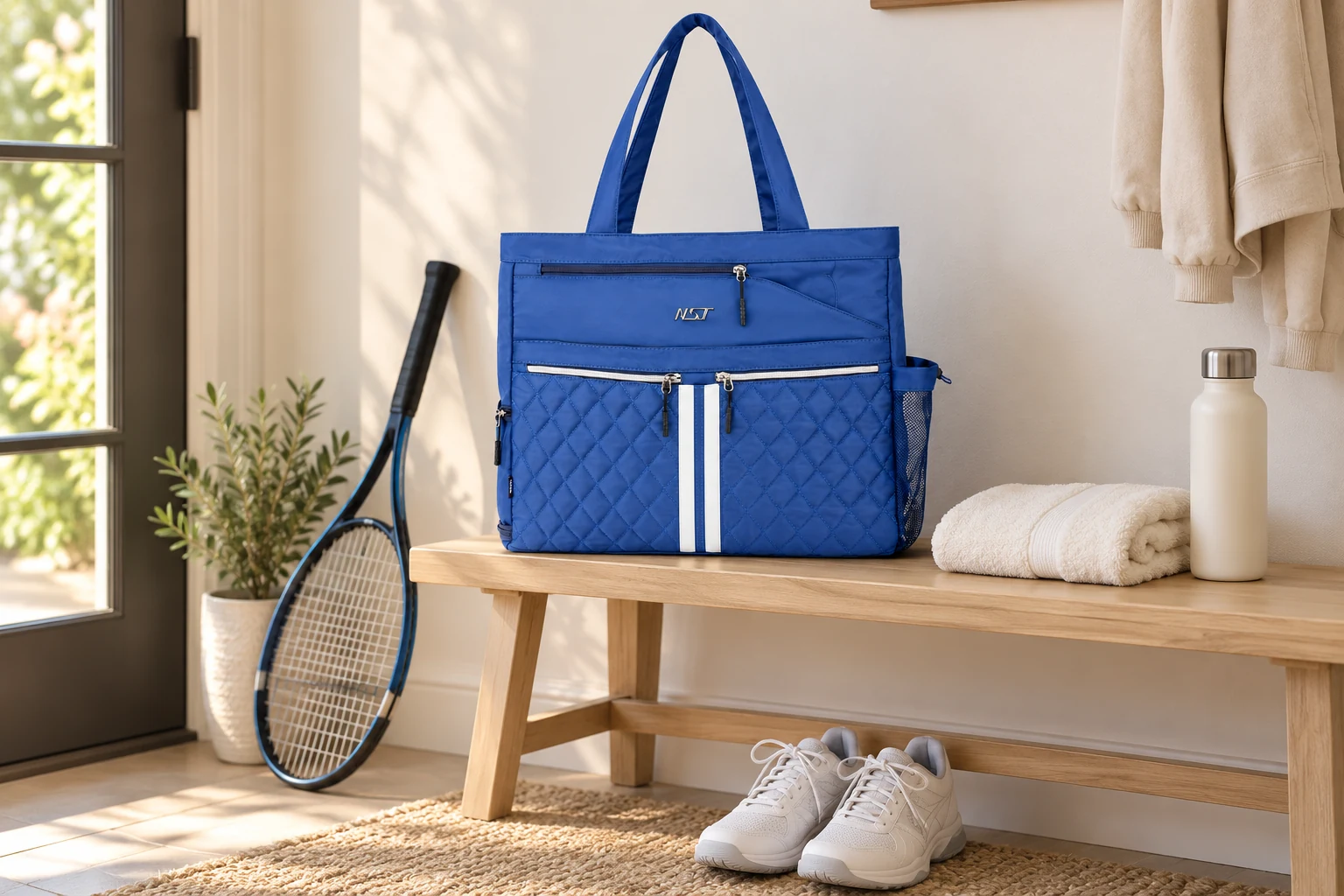
Apparel Math: Calculating Your Court Outfits
The most common mistake on a tennis weekend is underestimating how many clothes you will sweat through. Unlike a single clinic at home, you cannot simply throw your gear into the washing machine that evening.
- The two-outfit daily rule: If your schedule includes morning drills and afternoon doubles or match play, plan for two distinct performance outfits per day. Sitting down for lunch or driving between venues in sweat-soaked tennis clothes is uncomfortable and increases the risk of chafing and chills. For a three-day weekend (Friday afternoon to Sunday afternoon), plan on four to five playing kits: breathable moisture-wicking shirts, shorts or skirts with secure ball pockets, and sports bras.
- Double your sock calculation: Blisters can quickly derail a tennis weekend. When your feet sweat during high-intensity footwork, moisture softens the skin and increases friction against your shoes. Pack at least two pairs of cushioned, moisture-wicking athletic socks per day of play—roughly five to six pairs for a three-day weekend. Swapping into a completely dry pair of socks between sessions is one of the simplest ways to keep your feet blister-free.
- Warm-up and weather layers: Morning clinics often begin when courts are still cool and damp. Pack a lightweight technical jacket, quarter-zip pullover, or track pants that you can easily pull off once your dynamic warm-up is complete.
- Sun protection gear: Long outdoor sessions require reliable sun protection. Bring a breathable visor or athletic cap to keep sun and sweat out of your eyes, sport sunglasses that remain secure during sprints and overheads, and sweat-resistant broad-spectrum sunscreen. A UV-protective lip balm and a small cooling towel complete your courtside kit.
Sweat, Mud, and Footwear: Managing Laundry and Court Grit
Managing used gear on the road requires a deliberate plan. If you are heading to an adult tennis camp or weekend retreat like Total Tennis, confirm laundry arrangements directly with your accommodation in advance—guest facilities are rarely guaranteed, and you may need enough fresh outfits for the entire stay.
- Separate wet gear immediately: Never toss damp, sweaty clothes loosely into your travel bag alongside clean items. Pack two breathable mesh laundry pouches or lightweight sealable wet bags. In your hotel or cabin, hang damp tops and shorts in the bathroom or on a drying rack to air-dry completely before placing them into your laundry pouch for the trip home.
- Isolate your court shoes: Tennis court dust, particularly Har-Tru or red clay grit, easily transfers to other fabrics. Never pack your playing shoes loose against your clean clothes. On the NST Tennis Tote, the separate 40 × 27 cm lower compartment has its own exterior zipper, keeping dirty outsoles and clay residue entirely isolated underneath the main compartment.
- Pack recovery slides for off-court comfort: Take off your court shoes as soon as your hitting session ends. Wearing specialized tennis shoes on concrete, asphalt, or gravel wears down the tread and brings outdoor dirt onto the courts. Slip into lightweight slides or cushioned recovery sandals right at the courtside bench to let your feet breathe and your tennis shoes air out.
Off-Court Wardrobe and Weekend Essentials
A great tennis weekend balances intense court time with relaxed meals, resort amenities, and comfortable travel. Pack clothing and personal care items that bridge that gap smoothly:
- Resort-casual outfits for dinners: Choose low-maintenance, wrinkle-resistant pieces for evenings: linen shirts, relaxed trousers, knit polos, sundresses, or tailored shorts. These work equally well for an outdoor patio lunch, a post-match drink, or a nice dinner in town.
- Swimwear and lounge pieces: Many tennis resorts and hotels feature pools, hot tubs, or steam rooms that aid in muscle recovery. Bring a swimsuit and comfortable loungewear for unwinding after hours on your feet.
- A compact body-care and recovery kit: Jumping from your normal weekly routine to multiple hours of tennis each day strains muscles and joints. Pack a travel-sized recovery kit with:
- A lacrosse ball or mini massage roller for working out tight calves, glutes, and shoulders.
- A resistance band for pre-court shoulder and hip warm-ups.
- Blister pads (moleskin or hydrocolloid bandages) and athletic tape.
- Electrolyte powder packets to mix with your water throughout the day.
- Travel-sized pain relievers or muscle balm for evening aches.
- Tech and travel documents: If you need to stay connected during downtime, use a dedicated padded sleeve for your laptop or tablet and charger. Keep your booking confirmations, club membership cards (or digital USTA login), and a portable power bank easy to reach.
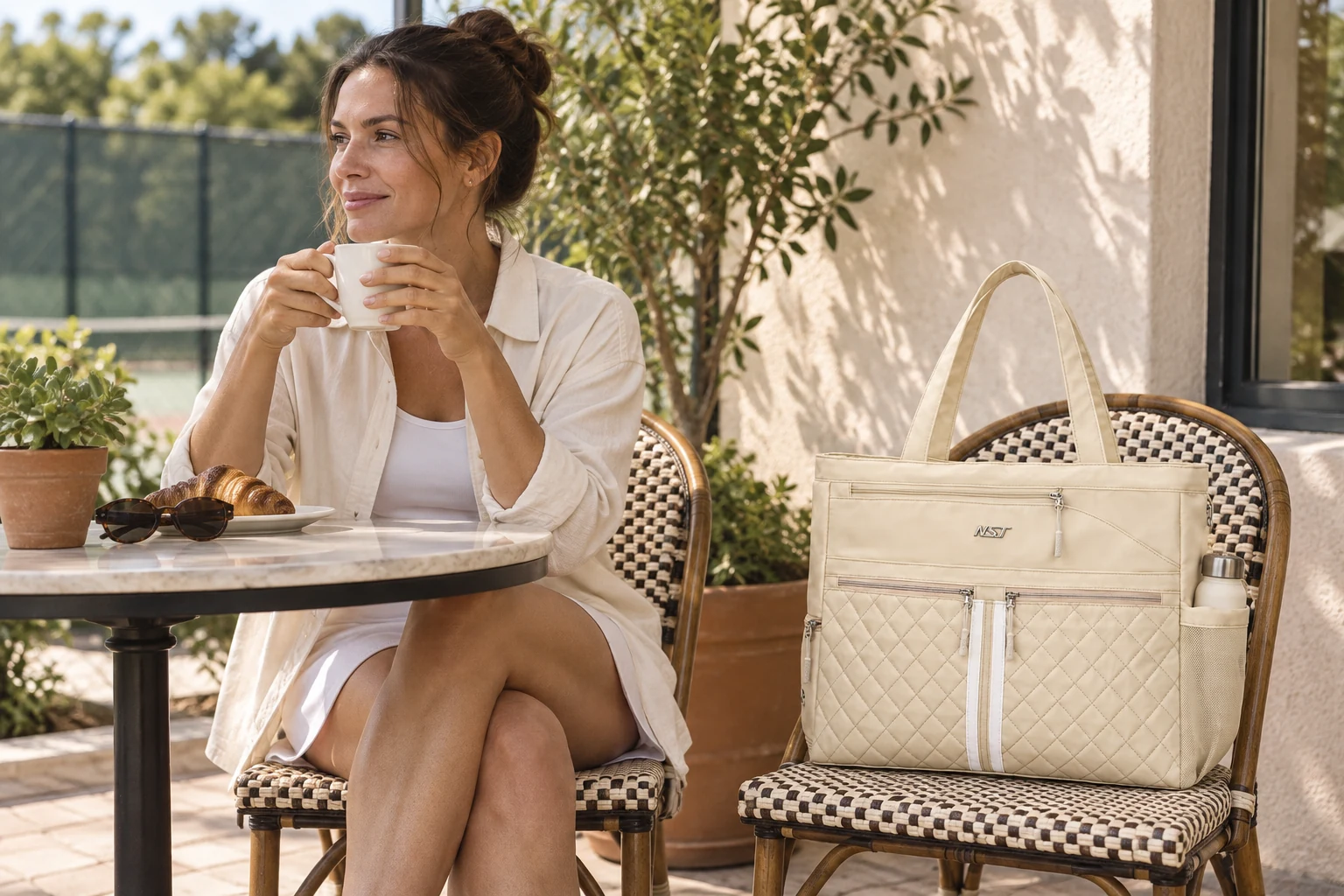
How to Pack Your Bags: The One-Bag vs. Two-Bag Strategy
How you organize your luggage depends on the length of your trip and how you travel:
The Solo Weekender (For a 2-Day Light Trip)
If you are driving up for an overnight trip or a light two-day weekend, the NST Tennis Tote (35L total capacity) can serve as a solo bag. Because volume is distributed across specialized compartments rather than a single open cavity, do a quick test-pack at home with your gear to make sure your clothing, shoes, and tech sit comfortably together:
- Underneath: Pack your court shoes in the separate bottom compartment to keep clay and dust isolated.
- Outside: Place your primary racket in the front pocket and your backup racket in the rear pocket. Slide your reusable water bottle into the exterior side pocket.
- Inside the main compartment: Roll two compact playing kits, one casual evening outfit, sleepwear, and a compact wet-gear pouch.
- Interior sleeves and zip pockets: Slide your laptop or tablet into the padded sleeve, with travel-sized toiletries, charger, spare grips, and sunglasses organized across the interior pockets.
The Two-Bag System (For a Full 3-Day Camp or Clinic)
For an intensive three-day retreat where you need multiple backup kits, bulkier outerwear, and casual dining clothes, pair your tennis tote with a small carry-on suitcase or duffel:
- The suitcase stays in your room: It holds your extra changes of clothes, evening footwear, dinner attire, bulkier recovery tools, and laundry pouch.
- The NST Tennis Tote acts as your mobile court bag: Carry it to and from the courts each day with your two rackets, court shoes, towel, daily change of clothes, balls, hydration, sunscreen, and courtside essentials. Because the quilted nylon body weighs just 1.5 pounds (680 g), you can move between the court, clubhouse café, and town without carrying a bulky, oversized tournament bag.
Post-Weekend Reset: Unpacking When You Get Home
A successful trip ends with taking care of your gear so it is ready for your next league match or practice:
- Unpack your bags immediately upon arrival. Empty your wet-laundry bags directly into the wash before odors set into synthetic fabrics.
- Remove your court shoes from the lower compartment and shake out any loose clay or grit outdoors. Let them air out in a dry, ventilated area.
- Inspect your rackets. Check for frayed strings, worn grommets, and grips that need replacement after hours of intense play.
- If your tote picked up court dust or clay marks, wipe it down with a damp cloth and mild soap. The water-resistant quilted nylon cleans easily by hand. Air-dry it in the shade before packing it away.
Keep reading.
What to Bring to a Tennis Tournament: Pack for Match Day
Prepare for a tennis tournament with a court-ready checklist, event details to confirm, and a plan for the time between matches.
What to Bring to Your First Tennis Lesson: A Simple Bag Checklist
A first tennis lesson checklist: what to ask your coach, what to bring to court, and how to pack for work or plans afterward with the NST Tennis Tote.
Cute Tennis Bags: A Quilted Tote for Tennis and Everyday Plans
Diamond quilting, an everyday tote shape, and dedicated tennis storage: meet the NST bag made to go with your court clothes, workday outfit, and weekend plans.